Over the past decade, access to healthcare professionals has steadily declined—and the dynamic has only intensified in recent years. More than 40% of physicians have historically refused or heavily restricted access to medical device sales representatives, with this trend accelerating post-COVID.* While some access has returned, it is far more selective, with physicians choosing when, how, and with whom they engage. As a result, the traditional model of broad, in-person coverage is no longer viable. The number of sales reps has declined as marketing leaders reassess reach and frequency strategies, recognizing that flooding the market is ineffective—particularly as a defensive approach. To close these gaps, medical device companies are increasingly relying on non-personal and omnichannel tactics to extend reach and maintain engagement.
Another study, regarding the frequency at which the most valuable decision makers are contacted, noted this group of doctors is being barraged at a nearly unbelievable average of 2,800 “touches” per year. This translates to 1 contact for every working hour! Apart from the questionable economics of this marketing spend, the question that device sales and marketing leaders need to ask is, “How can this level of uncoordinated communication be anything but noise?”
In other words, how is it possible for a brand to deliver a message that will be heard above the clutter? As the industry and communication at large evolve through decades of experience and adaptation, we have found a solution based on predicting, testing, gathering insights, and confirming our assumptions. A succinct combination of actions yields success critical for driving bottom-line growth through highly engaged customer experiences — even at mass volume. You are probably wondering: how is that possible? Where do you begin?
Predictive Analytics
With a team of seasoned industry experts and access to behavioral history on similar audiences, analysis can be performed to establish an initial hypothesis of what will work best. Most corporations, if they get that far, stop there. They see the desired results, i.e., “above industry average” rates, and the box gets checked off. With analytical expertise, the science of marketing is involved – a plan is developed to test and learn.
Predictive models use algorithms to process huge quantities of data and relate the probability of a specific result to a specific action. In a simplistic example, if I send an email to a person, what is the likelihood that they will open it? Predictive models, however, can process far more complicated computations to include huge numbers of parameters. For example, if I send an email to a person at a particular time, on a particular day, with a particular subject line, and a particular font, what is the likelihood they will open it as compared to the permutations of other choices?
Now let’s envision a campaign with 10,000 targets, using 6 marketing channels, over 6 weeks. What sequence of channel outreach will be most effective? Should all the channels be deployed? Are there segments that will respond in different ways to different treatments? And the list of questions goes on…
What we are trying to do is deploy the assets in a constrained time and resource environment. Predictive models can help determine how to send the right message, with the right channel, at the right time, to the right target, in the right sequence. The assumptions are set up to be challenged. A thirsty team learns by challenging their own assumptions, breaking through, and making new ones as well.
True Omni-Channel Execution
When planning a non-personal marketing campaign, marketing executives need to strategically select the most valuable combination of channels, messages, and frequency for their target audience. Oftentimes, a campaign will rely on one channel (typically email), utilize messages that have been “recycled” based on prior approved content, and be delivered at a frequency that is deemed “appropriate” by their agency — but rarely based on data-driven practices. Some brands use advanced models of “headroom” or opportunity space to suggest a higher level of frequency. But in the end, there is typically only marginally differentiated communication among health care professional segments.
In the past few years, most non-personal campaigns have begun with an assumption that there will be a single communication channel: email. This is due to a belief that email is less expensive and coordinating a multichannel approach is too complex. However, this narrow approach to channel choice contradicts what has long been known about physician preference. That is, doctors have different channel preferences. Some physicians respond more favorably to print, and indeed, telesales reps continue to be an effective resource within the marketing mix.
Health care professionals tend to want reps that can deliver an expertise in the science the physician works in, as they will not have the time to develop their own proof of case. And if those Clinical experts are not available face-to-face, doctors are now more willing to interact with them via video chat and other remote means. Some companies, especially those with products that demand scientific expertise, have taken a hybrid approach to their field staff, deploying a product team focused on customer service (including access to samples, etc.) and a team of clinical representatives who can speak to the medical device science and practice issues. This multi-pronged strategy to marketing a brand or product can also be used as the framework for content strategy in non-personal tactics.
The availability of clinical experts can be optimized and extended through the clinical campaign, offering video details or lunch and learns with experts scheduled to best meet the clinicians’ schedule. This training component may be a critical part of the sales process before the determination to purchase or part of the sales promise, sealing the deal by moving from transactional sales to long-term support and partnership. Depending on the device, levels of training capabilities may be a consideration, depending on the role of the trainee or level of services offered at the location. The opportunity for specialization can be a motivating factor from a marketing and training standpoint.
Rapid Adaptation and Learning
Once a campaign has been determined and the start button pushed, then real life happens. Our earlier “Predictive Analytics” are built to be broken down, and an expert team knows and looks for campaign signals to respond to such events. In fact, that is where the value of true omni-channel marketing lies. Our “targets” are real people who don’t always behave as mathematical models predict. Rapid adaptation is the ability to change course mid-stream in a campaign, recalculate what the next best action is, and execute it. This level of sophistication has taken decades to achieve through data insights and requires a structured decision engine and, equally important, a truly multi-channel platform capable of performing the actions. Many people market using multiple channels, while a few actually weave the responsive network together for data interaction significance. This approach allows statistical meaning to be found and customers to enjoy a more unique experience.
At the end of each campaign, we have the opportunity to learn. What worked, what didn’t? Were the models correct? What adaptive paths were created to respond dynamically in real time? Add in market expertise regarding the specific target audiences and ask, is there a reason for an outlier’s behavior? Is a subgroup forming that may benefit from specific target messaging? This end-of-campaign analysis is critical in refining assumptions and feeding data models to optimize prediction and adoption in the next cycle.
Device sales are unlike pharma. We cannot rely on a single prescription being written. Device sales count on a complex web of individuals who all impact the choice in the end. Economic and clinical decision-makers may rely on speed, accuracy, maintenance, ease of use, return on investment, comfort, and so much more to be delivered by your device to their patients. This means “one- sized messaging does not fit all”. To be successful, you must map out the complete influencer and decision-maker audiences and what your product can provide them. Overlooking an audience may mean losing a sale.
In the end, the key to initially reaching health care professionals who have reduced access to sales reps is augmenting and replacing the rep with the optimal mix of digital and non-Digital communication tactics that are part of a coordinated whole to deliver meaningful content. This coordinated approach needs to optimize the frequency of touches, the variety of subjects, and the frequency of offers — such as samples or demonstration opportunities. The objective is to optimize communication so there is never a barrage of communications from the same brand, and so messages at an enterprise level appear coordinated. With smart approaches to measuring tactical impact, non-personal communication efforts can be deployed to maximize ROI and reduce the extraneous noise. Of course, this coordinated effort requires a smart CRM system that is driven and guided by actual healthcare professional behavior. When marketers know how their campaigns are stimulating what matters to their customers, then those campaigns can be tuned so that they are optimized for the best effect.
Having access to data insights means you know the doctor is seeing you, even though you’re not seeing them.
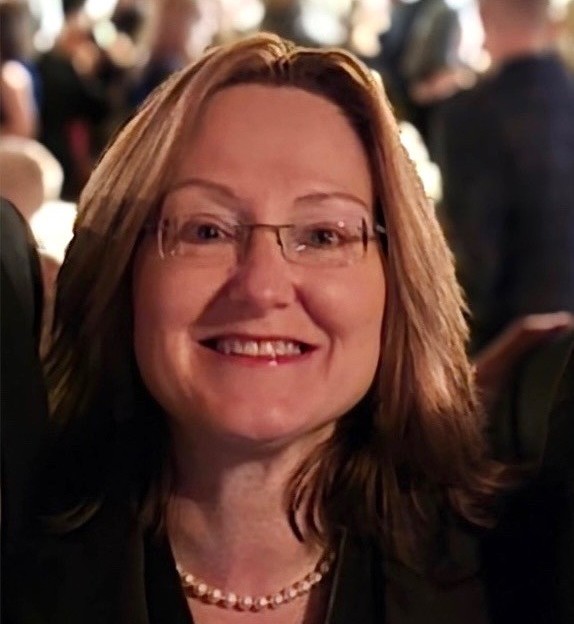
Stephanie Andacht joined Modern Marketing Concepts in 1992 and proudly claims a proven record of progressive sales leadership within the organization. As VP of Strategic Accounts, she applies her deep industry knowledge to partnerships with some of the company’s most valuable pharmaceutical, medical device, and diagnostic clients.
* https://tealium.com/blog/data-strategy/no-see-healthcare-professionals-hcps-and-how-to-engage-them/?utm_source=chatgpt.com